

Pomegranate Emerges as a New Frontier in Longevity Research
Japanese and Spanish Researchers Unveil Fermented Pomegranate Breakthrough Linking Gut Science, Mitochondrial Health, and Aging
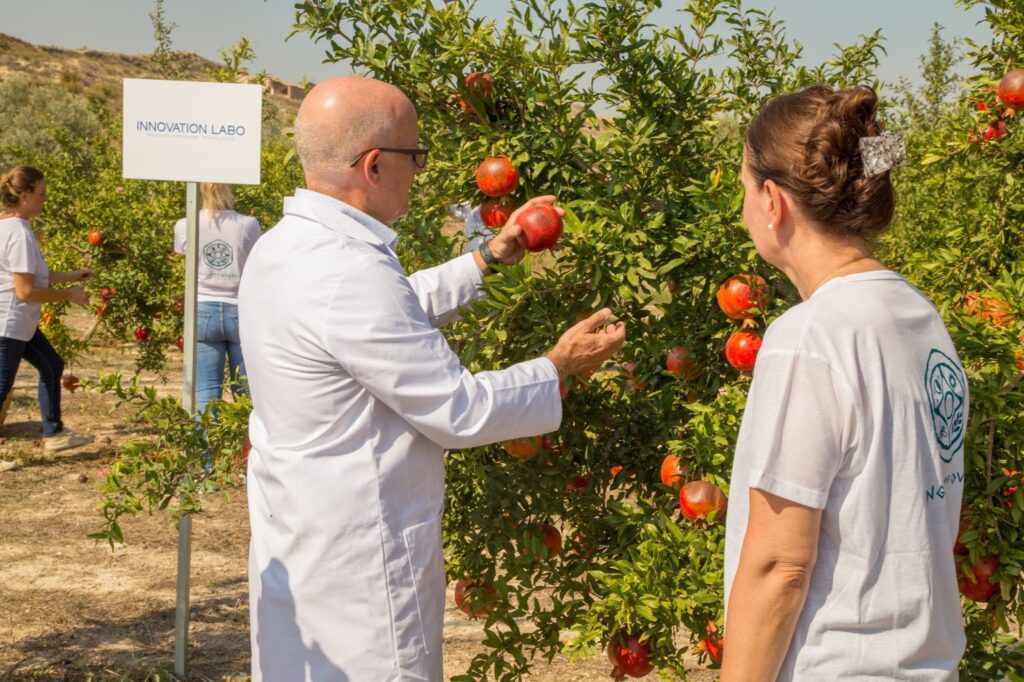
In southern Spain, on a stretch of biodynamic farmland shaped by heat, drought, and centuries-old agricultural traditions, researchers may have uncovered an unexpected contender in the search for healthier aging: the pomegranate.
A joint research team from Innovation Labo Japan and the Miguel Hernández Institute has released early findings on a project exploring whether the fruit can naturally produce urolithin, a compound increasingly studied for its effects on mitochondrial renewal, a key process linked to muscle strength, energy production, and age-related decline.
What makes the discovery notable is not only the compound itself—already the subject of global interest—but how it is being produced. Rather than relying on synthetic pathways or industrial reactors, the scientists turned to the fruit’s own microbiome. Through a controlled fermentation process, they were able to activate the pomegranate’s native microbial community and encourage the natural formation of urolithin within the fruit matrix.
This could mark the first time a pomegranate research program has been vertically integrated from orchard to final ingredient, using whole-fruit biotransformation rather than extraction or chemical synthesis.
A Different Direction for Longevity Science
Urolithin has been widely discussed in longevity research for its ability to trigger mitophagy, the cellular recycling system that removes damaged mitochondria. But only a portion of the population can naturally generate the compound from dietary polyphenols, and commercial products today typically depend on laboratory fermentation.
The Spanish–Japanese collaboration introduces a third path: letting the fruit itself—along with its symbiotic microorganisms—carry out the conversion.
“It’s an early signal, but a compelling one,” Dr. Vicente Micol Molina, the Research Director, said. “We are learning how to guide natural systems instead of replacing them.”
From Farm to Function
The study also aligns with a broader movement in nutritional science: bringing agriculture, ecology, and microbiology closer together. The idea is simple but ambitious—grow crops not only for flavor or yield, but for their biochemical potential.
In this case, researchers see the possibility of farm-to-function longevity ingredients, where health-supportive molecules are produced through ecological processes rather than industrial manufacturing.
The approach reflects two growing scientific trends:
– Regenerative agriculture, which emphasizes soil health, biodiversity, and microbial richness.
– Microbiome-driven biotransformation, which explores how natural fermentation can unlock or enhance bioactive compounds.
By merging the two, the team hopes to develop ingredients that align more closely with the dynamics of whole foods and the human gut, rather than isolated molecules.
What Comes Next
With comprehensive safety and efficacy evaluations now completed, the ingredient is positioned for commercial introduction. Rigorous toxicological assessments, biological activity validation, and human studies have confirmed its safety, consistency, and functional relevance. A full clinical trial report is currently under peer review and in the process of publication, further strengthening the scientific foundation supporting its use.
This milestone represents a notable moment in modern nutrition science. At a time when innovation is often driven by highly industrialized, synthetic approaches, these findings underscore the value of bioactives derived from carefully cultivated fruit and their associated microbiomes. The research highlights how natural metabolic complexity—when properly characterized and standardized—can yield clinically meaningful outcomes.
As the science moves from publication to market application, the pomegranate—long associated with fertility, vitality, and renewal in ancient cultures—assumes renewed relevance in contemporary longevity and metabolic health research, bridging traditional symbolism with modern clinical validation.